
female promt
1033 Helpline for Road Users on National Highways
Recognizing the importance of improving safe travel along National Highways and to help NHAI in taking preventive measures & improve maintenance of road and facilitate to serve the road users, NHAI has launched the Toll Free “1033” Helpline Number to provide 24x7x365 assistance to road users on NHAI’s tolled stretches in case of Emergency/Non-Emergency issues.
The 1033 Helpline provide multi-lingual support service to road users and integrated with the other highway operations facilities such as toll plaza Ambulance, Patrol Vehicle, Crane, etc. depending on the need. Non-emergency issues addressed include FASTag related complaints/queries, feedback about facilities / amenities available at the Toll Plazas and along the National Highways, road conditions, potholes, street light and toll charges related issues etc.
Since NHAI has launched bank neutral NHAI FASTag and 1033 number is printed on ‘NHAI FASTags’ as ‘Customer Care Number’ to provide support to NHAI FASTag users.
Salient Features:
A single 4-digit Toll Free Universal Access Number (UAN) “1033”.
Single point of contact to report emergency/non-emergency issues for across National Highways stretches.
24X7 Centralized Call Centre.
Assistance to road accident victims on National Highways by arranging ambulance, highway patrol vehicle and cranes to remove wrecked vehicles from the accident site at National Highways.
FASTag related support.
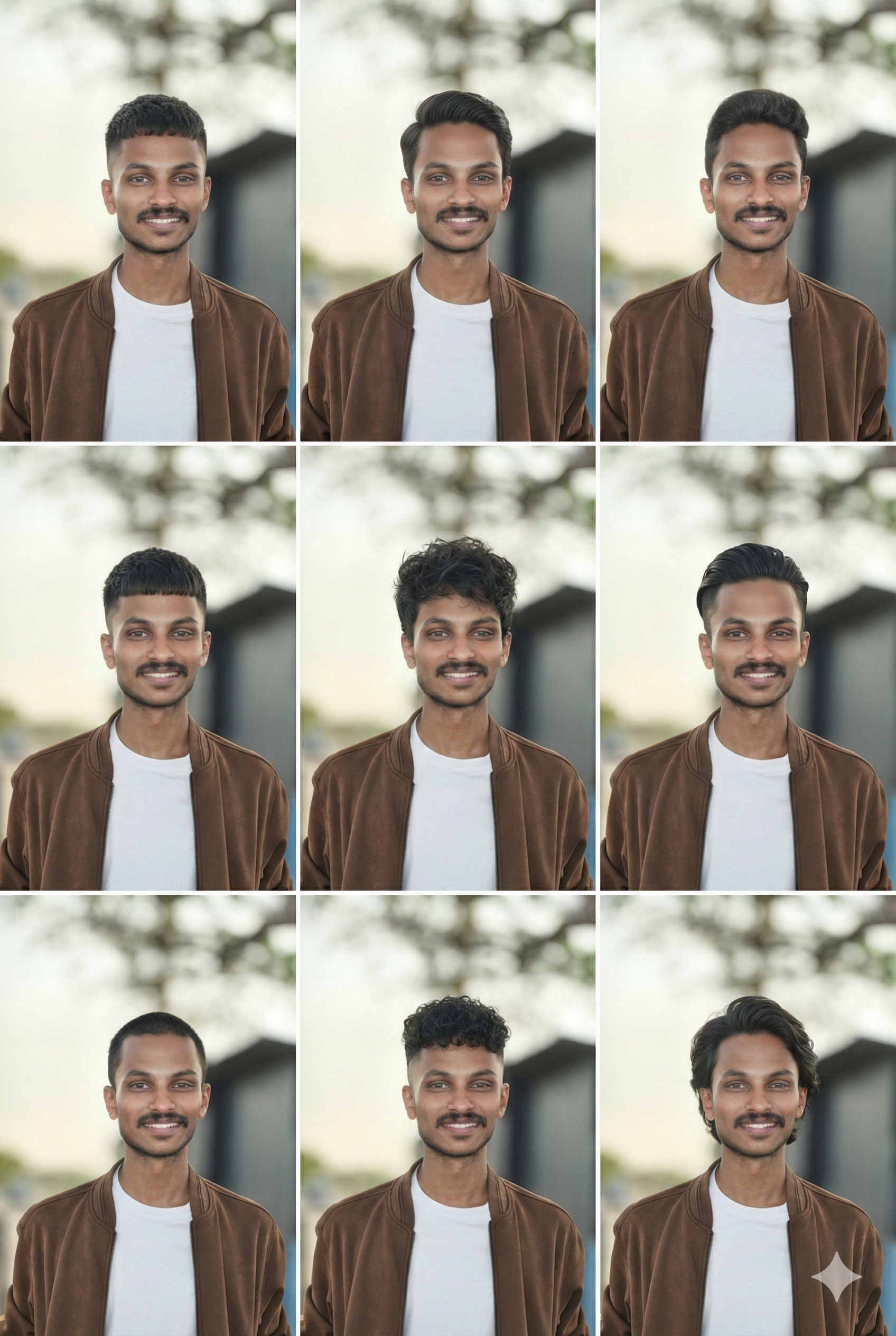


Use the uploaded image as a STRICT, NON-NEGOTIABLE identity reference.
ABSOLUTE FACE LOCK (HIGHEST PRIORITY):
FIRST (INTERNAL STEP ONLY — DO NOT OUTPUT TEXT):
Analyze the uploaded face to determine:
SECOND (FINAL OUTPUT — IMAGE ONLY):
Generate ONE single vertical 9:16, true-4K composite image containing a 3×3 grid.
GRID RULES:
STRICT CONSISTENCY REQUIREMENTS:
HAIRSTYLE VARIATION RULES:
TECHNICAL REQUIREMENTS:
ABSOLUTE RESTRICTIONS:
GOAL:
Create a barber-grade haircut reference grid where the uploaded face is IDENTICAL in all 9 tiles and ONLY the hairstyle changes.
Custom Gesture Shortcuts: Transforming Motion into Command
The concept of creating your own shortcut with a simple gesture centers on the seamless integration of physical movement and digital execution. By defining a specific motion—such as a circular swipe, a letter drawn on a screen, or a multi-finger tap—you bypass traditional navigation menus. This personalization allows you to tailor your device’s interface to your specific habits, making the most common tasks feel like a natural extension of your hand movements rather than a series of clicks.
To register custom gestures, most systems utilize a “record and map” process where you demonstrate the motion for the software to analyze. During this registration phase, the device captures the coordinates, speed, and pressure of your input to create a digital template. Once saved, you can link this unique pattern to a quick command, such as launching a favorite app, taking a screenshot, or toggling system settings like Wi-Fi or Bluetooth.
The technical side of gesture recognition relies on sophisticated sensors or vision-based tracking to identify your shortcuts in real-time. On touchscreens, the hardware tracks the path of your fingertip, while on computers, a webcam or specialized mouse might be used to interpret spatial movements. Advanced algorithms ensure that the system can distinguish between a deliberate gesture and accidental contact, providing a reliable way to execute complex commands with a single, swift motion.
Efficiency is the primary goal when designing these shortcuts, as a well-chosen gesture should be faster than any keyboard or mouse alternative. Successful gestures are typically simple, single-stroke movements that are easy for the user to remember and for the machine to recognize accurately. By building a library of these registered shortcuts, you create a high-speed workflow that minimizes distractions and maximizes productivity, allowing for a more intuitive and fluid interaction with your technology.
Would you like me to help you create a list of unique gesture ideas tailored to a specific professional task, like video editing or coding?
CLICK HERE TO INSTALL THIS APPLICATION



2020 MODEL VCHICLE,PETROL VERTION.RE REGISTER
IF YOU WAND BY THIS CAR CONTACT THIS NUMBER +917034653163
Gemini-Prompts.vercel is an interactive web application that allows users to explore and utilize curated prompt templates designed specifically for Google’s Gemini AI model. Built using the Vercel AI SDK, this platform provides a clean, intuitive interface where users can test different types of prompts ranging from general knowledge queries to creative writing and coding tasks. Its primary goal is to make prompt engineering easier and more accessible by offering a starting point for high-quality interactions with Gemini. Whether you’re a beginner or an AI developer, it serves as both an educational and practical resource.
The site showcases a wide variety of prompts categorized by task type—such as summarization, translation, brainstorming, roleplay, and software development. Each prompt is crafted to take advantage of Gemini’s capabilities, especially its reasoning and multimodal understanding. For developers and researchers, this becomes a testing ground to see how variations in phrasing or context can dramatically affect the model’s output. By offering ready-to-use templates, the platform eliminates the guesswork in prompt design and speeds up prototyping or experimentation.
Another valuable aspect of gemini-prompts.vercel is its adaptability. Developers can fork the repository from GitHub and customize the system prompts, expand the prompt library, or integrate new models altogether. Since it uses Next.js and supports serverless deployment through Vercel, it’s scalable, fast, and developer-friendly. The app also makes use of Vercel’s native tools like KV storage and Edge Functions, making it ideal for real-world deployment of AI-driven applications, not just demo use.
In summary, gemini-prompts.vercel is more than just a prompt tester—it’s a toolkit for exploring the power of conversational AI through prompt engineering. It empowers users to interact with Gemini effectively while also enabling developers to experiment, customize, and deploy their own AI chatbot experiences. Whether you’re looking to fine-tune the performance of a Gemini-based system or simply experiment with what it can do, this platform provides the infrastructure and inspiration to get started.

Music has a powerful influence on the body and mind, and certain kinds are especially effective at helping people fall asleep quickly. Soft, slow-tempo tracks with calming melodies can lower stress levels and encourage deep relaxation. Unlike energetic or fast-paced songs, sleep-friendly music avoids loud beats or sudden changes, creating a steady, soothing flow that allows the brain to switch off. Many people turn to these gentle sounds as part of their nightly routine to prepare for rest.
Classical music is one of the most popular categories for sleep. Pieces like Clair de Lune by Claude Debussy or Erik Satie’s Gymnopédies are timeless examples of how delicate piano compositions can quiet the mind. Their flowing melodies and slow rhythms naturally encourage the body to match that pace, slowing down the heartbeat and easing tension. Similarly, orchestral strings played softly can bring a sense of comfort and peace, ideal for drifting off.
In recent years, ambient and lo-fi music have also become popular choices for sleep. Ambient tracks often feature gentle synth waves, natural sound effects like rain or ocean waves, and minimal variation to create a dreamlike soundscape. Lo-fi beats, with their soft crackling textures and simple rhythms, are especially loved by younger listeners who want a relaxed, modern feel without distraction. These genres are particularly effective because they create a calm background that doesn’t demand attention.
Many people also find comfort in lullabies, acoustic ballads, or meditation-style tracks designed for rest. Soft vocals, light guitar, or repetitive melodies provide a sense of emotional security, reminding listeners of safety and warmth. Whether it’s traditional lullabies, peaceful folk tunes, or purpose-built sleep soundtracks, the key factor is that the music remains gentle, predictable, and steady. When paired with a quiet environment, these songs can help anyone fall asleep faster and enjoy deeper rest.

